Friday, March 26, 2010

TINIFOK HAGON NIYOK (Coconut Leaf Weaving)

Pictured above: TINIFOK HAGON NIYOK (Coconut Leaf Weaving) by Antonia Castro


Hafa Adai! As part of my research, I came across a beautiful poster of the various coconut weaving crafts/articles that have been introduced to students in the Guam Department of Education for numerous years in Chamorro classes and in celebration of Chamorro Week, which later became what we now know as Chamorro Month. The weaver of the crafts showcased is Antonia Castro, who retired from the Chamorro Studies Division of GDOE. The following is a list of the coconut leaf crafts:

Aniyu

Apåcha’

Bålas

Bandeha

Bibek

Che’op

Estreyas

Estreyas

Guagua’

Gue’ha

Guihan Dikike’

Haggan

Hagon Flores

Henton Ulu

Higai

Hugeten Månglo’

Kadena

Kanåstra

Katupat

Katupat Diamånte

Kulepbla

Kurona

Paluman Dikike’

Piña

Plåtu

Putseras

Rusåt

Saligåo

Tason

Tuhong

Uhang


Because my mother is a weaver, I was fortunate enough to learn how to weave the following: henton ulu, gue'ha, rusåt, and putseras. I'm still learning, and I'm appreciative of the experience, as it is an indigenous cultural art that needs an awakening, especially for use in classroom instruction with special attention to the subject of mathematics. Project MACIMISE has empowered us to do much research and seek the traditional/indigenous ways of learning mathematics. It is a valuable project that has enlightened me and the various indigenous & local experts I've interviewed. It is my hope that I will be selected for Phase 2 of the project, so that I can contribute even more to this valuable project.

Thursday, March 25, 2010

Interviews with Dr. Larry Cunningham and Master Weaver Phillip Sablan

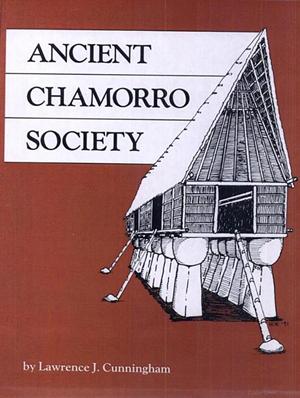
Pictured above: Ancient Chamorro Society written by Dr. Lawrence "Larry" Cunningham


Pictured above: KAHA Certificate awarded to Master Weaver Phillip Sablan


Buenas! I'm still working on my research draft, and most recently I interviewed Dr. Larry Cunningham, the author of various Guam resources I'll be using in my research; and Master Weaver Phillip Sablan. Dr. Cunningham was the one who actually suggested that I interview Sablan, who was also one of his former students. I had interviewed a number of insightful weavers, so to add Sablan to the list was another resource that will prove to be resourceful!

Here are a couple of excerpts from my interviews:

Dr. Larry Cunningham: "Coconut weaving is effective in teaching mathematics, because it addresses the number one problem with mathematics instruction. Mathematics should be taught with practical applications, then students understand why they need to learn mathematics. The students can see practical necessity for mathematics."

"You start by counting over and locking the leaflets on the thick end of the half coconut frond. Then you skip a leaflet and weaver over, under, etc., then tying off the end, and finally taking the two halves and tying them together," Cunningham said.

Master Weaver Phillip Sablan: "Our (Chamorro) culture needs to evolve. It needs to survive. Coconut weaving can perpetuate our culture."

References:

Cunningham, L. Personal INTERVIEW. 22 March 2010.

Sablan, P. Personal INTERVIEW. 24 March 2010.

Saturday, March 20, 2010

Additional Interviews

Image source: Huråo, Inc.

Hafa Adai! Although I'm on step three of the writing process, I still wanted to add additional indigenous information. As such, I'm pleased to report that today I was able to interview two additonal Chamorro culture educators during the GCC Open Campus Day. These educators include Amon Guerrero, 62 years old, Chamorro teacher for over 25 years from Chalan Pago; and Ann Marie Arceo, 42 years old, Founder of Huråo Academy, residing in Hagat. Arceo has been teaching the Chamorro language and culture for 20 years. It should be noted that Huråo Academy is "one, if not the first Chamoru Immersion School that focuses on the teaching of Chamorro language and Self-identity on Guam. Huråo was founded in June 2005 as a non-profit organization" (Huråo Guahan, 2010).

Here's one quote that I found inspirational from Arceo, "Learn it (coconut weaving) as an art and way of living. Pass it on to our children. If all else fails, it can be our way of life." She said that coconut weaving also involves many math skills, such as "addition, subtraction, division, multiplication."

Guerrero shared the same sentiments. He said that when he teaches his students to coconut weave, they follow a pattern, and they use an even amount of leaves. He added that, "Coconut weaving is important to our culture. It will save our culture. It can provide us shelter, food, clothing."

Research Revised


The writing process is essential when writing a research paper, and it too, involves mathematics, as there are five steps that we must go through as part of this process, which include the following:

(1) Prewriting
(2) Drafting
(3) Revising
(4) Proofreading
(5) Publishing

I'm on step 3 of the writing process, as I will have to go back and make additional changes, as suggested by Don. I will delete the abstract I originally included. I will also delete all the ESL verbiage, as I initially personalized it with my ELLs in mind. I will also rearrange the references according to the following:

REFERENCES - Print and online sources
INTERVIEWS - Personal interviews

As a result of my draft, the new title of my research paper will be, Using Coconut Weaving in Guam Classrooms to Improve the Mathematics Skills of Local Students.

Here's the diamond in the rough paragraph that Don was glad to see in my draft:

"According to Cruz (2010), coconut weaving involves addition, subtraction, and division. He said that when you make a certain basket, in order to close the bottom you would have to divide the coconut leaves. He further said that pandanus baskets always need to have an even number of leaves to split and that odd numbers would not allow you to complete your ideal basket. He said that there is a pattern that must be followed in weaving. For example, for certain types of coconut baskets, 12, 16, 20 leaves are needed, but they will all be different sizes. This is also the same case for fans, which follow an "over and under" pattern throughout the course of creating the art piece (Naputi, 2010).

Don further mentioned that if I can expand the aforementioned paragraph into a set of clear, careful descriptions of coconut- and pandanus-leaf weaving, showing how these mathematical operations are involved, I will have a first-rate research paper.

Thanks, Don! It is my goal to do just that, to have a "first-rate research paper!" Good luck my fellow MACIMISERS, and may all of us reach that same goal, because ultimately it will impact our students!

Monday, March 15, 2010

Research Draft Submitted and References

I just submitted my VERY ROUGH DRAFT to Don, so that I may get immediate feedback from him on whether I'm moving in the right direction. If not, I will edit my paper accordingly. Considering that I am an ESL teacher, I titled my research paper, Toward the Development of a Mathematics Curriculum Using Coconut Weaving to Increase the Mathematics Schema and Skills of English Language Learners in Guam.

I've included my references for my research paper below, and if they may be of use to you, then that's great. In particular, these resources may be more relevant for my fellow Guam MACIMISERS, since the focus of the references pertain to the island of Guam. I wish you all the best of luck in your research!
REFERENCES

Anderson, R. C. (2004). Role of the reader’s schema in comprehension, learning, and memory. In R. B. Ruddell, & N. J. Unrau (Eds.), Theoretical models and processes of reading (5th ed.) (pp. 594-606). Newark, DE: International Reading Association.

Anderson, T.J. (2010). Weaving, Retrieved March 9, 2010 from http://guampedia.com/weaving

Bamba, J. Personal INTERVIEW. 14 March 2010.

Bransford, J. D. (2004). Schema activation and schema acquisition: Comments on
Richard C. Anderson’s remarks. In R. B. Ruddell, & N. J. Unrau (Eds.),
Theoretical models and processes of reading (5th ed.) (pp. 607-619). Newark,
DE: International Reading Association, Inc.

Carrell, P.L., Devine, J. and Eskey, D.E. (1988). Interactive Approaches to Second Language Reading. Cambridge: CUP.

Carrell, P. & Eisterhold, J. (1988). Schema theory and ESL reading pedagogy. In P. Carrell, J. Devine, & D. Eskey (Eds.), Interactive Approaches to Second Language Reading (pp. 73-92). Cambridge: Cambridge University Press.

Cruz, J.A. Personal INTERVIEW. 12 March 2010.

Cruz, J.Q. Personal INTERVIEW. 12 March 2010.

Cunningham, L. (1992). Ancient Chamorro Society. Honolulu, HI: Bess Press.

Cunningham, L. (2001). Guam, A Natural History. Honolulu, HI: Bess Presss.

Cunningham, L and Beaty, J. (2001). Guam, A Natural History. Honolulu, HI: The Bess Press.

Cunningham, L., Beaty, J. and Perez, R. (2001). A History of Guam. Honolulu, HI: Bess Press.

Dunford, B. and Ridgell, R. (2006). Pacific Neighbors, The Islands of Micronesia, Melanesia, and Polynesia. Hawaii: Bess Press.

Farrell, D. (1981). The Pictorial History of Guam, Guam: 1898-1918. Tamuning, GU: Micronesian Productions.

Farrell, D. (1986). The Pictorial History of Guam, THE AMERICANIZATION 1898-1918. Tamuning, GU: Micronesian Productions.

Farrell, D. (1991). The Pictorial History of Guam, THE SACRIFICE 1919-1943. San Jose, TINIAN: Micronesian Productions.

Grabe, W. (1988). Reassessing the Term Interactive. In Carrel, P.L., Devine, J. and Eskey, D.E. (1988). Interactive Approaches to Second Language Reading. Cambridge: CUP.

Guamology.org. http://www.guamology.org/

Guampedia. http://www.guampedia.com/

Guam Public School System Annual State of Public Education Report, School Year 2007-2008, October 30, 2008.

Guam Public School System Annual State of Public Education Report, School Year 2006-2007, October 30, 2007.

Guam Visitors Bureau (2010). Our Culture. Retrieved March 15, 2010 from http://www.visitguam.org/Runtime/Culture.aspx

Laguana, R. Personal INTERVIEW. 15 March 2010.

Lloyd, C.V. (1996). How teachers teach reading comprehension: an examination of four categories of reading comprehension instruction. Reading Research and Instruction, 35: 170-84.

Naputi, J.S. Personal INTERVIEW. 6 February 2010.

Naputi, J.S. Personal INTERVIEW. 23 February 2010.

Naputi, J. N. Personal INTERVIEW. 23 February 2010.

Ohler, J. (2006). The World of Digital Storytelling. Educational Leadership, 63 (4): 44-47.

Oliver, D. (1989). The Pacific Islands. Honolulu, HI: University of Hawaii Press.

Paulino, F. (2010). Weaving. Retrieved march 9, 2010 from http://www.pacificworlds.com/guam/stories/story3.cfm

Political Status Education Coordinating Commission (1993). Hale’-ta, Hestorian Taotao Tano’, HISTORY OF THE CHAMORRO PEOPLE. Agana, GU.

Political Status Education Coordinating Commission (1994). Hale’-ta, I MA GOBETNA-ÑA GUAM, Governing Guam: Before and After the Wars. Agana, GU.

Ridgell, R. PACIFIC NATIONS AND TERRITORIES, The Islands of Micronesia, Melanesia, and Polynesia. Honolulu, HI: Bess Press.

Sanchez, P. (1988). Guahan GUAM: The History of Our Island. Agana, GU: Sanchez Publishing House.

The Culture of Guam. Retrieved March 12, 2010 from http://ns.gov.gu/culture.html

The Palms Press. Hafa Adai Guam, USA 1988-1989, A VISIT TO THE VILLAGES.

Zabel, M.K. (1991). Storytelling, Myths, and Folk Tales: Strategies for Multicultural Inclusion. Preventing School Failure, 36 (1), 32-34.

Saturday, March 13, 2010

Research Interviews and Master Weaver Tan Elena's Contribution

As part of my research, I was fortunate enough to interview my mother, Julia Santos Naputi, who as you know is a weaver and has taken the time to teach me the steps of weaving simple crafts that students in grades 1, 4, and 7 will enjoy, as part of their mathematics instruction. See my previous posting regarding my interview with her. My father, Joaquin Nangauta Naputi, also contributed to the interview, as he recalled how my grandfather, Juan Acfalle Naputi, whom we fondly called "Tata" would often weave his own baskets for farming purposes (i.e. hold coconuts, fruits, etc.). He also mentioned that my grandmother, Maria Nangauta Naputi, whom we fondly called "Nana" would also weave mats for the house, but that she would also sell them.

In addition, I've been able to interview Jose Atoigue Cruz, Jr. and James C. Bamba, who have both been weaving for 15 years. They contributed their weaving photos, and there is also a weaving video of the katupat that Bamba shared, which I wrote about in a previous blog post. For further insight, I interviewed Dr. Jose Quinene Cruz, who grew up with weaving surrounding him, as well as Ronald T. Laguana, Administrator of the Guam Department of Education Chamorro Studies Division. A special interview of Tan Floren Meno Paulino was also obtained online via pacificworlds.com.

In particular, Jose Atoigue Cruz, Jr. shared with me that he learned his weaving from Guam's best, Tan Elena Cruz Benavente. He mentioned that Tan Elena was honored by the Guam Council on the Arts and Humanities Agency as a Master Weaver of the Agak (Pandanus). As such, pictured in this post is Tan Elena featured as a Pandanus Master Weaver. She has since passed away, but I'm sure she is smiling from heaven above knowing that she has passed on the Chamorro artistry of weaving to her family, who will hopefully continue to pass it down for generations to come.


References:

Bamba, J. Personal INTERVIEW. 14 March 2010.

Cruz, J.A. Personal INTERVIEW. 12 March 2010.

Cruz, J.Q. Personal INTERVIEW. 12 March 2010.

Laguana, R. Personal INTERVIEW. 15 March 2010.

Naputi, J. S. Personal INTERVIEW. 23 February 2010.

Naputi, J. N. Personal INTERVIEW. 23 February 2010.

Paulino, F. (2010). Weaving. Retrieved March 9, 2010 from http://www.pacificworlds.com/guam/stories/story3.cfm

The Culture of Guam. Retrieved March 12 , 2010 from http://ns.gov.gu/culture.html

Thursday, March 11, 2010

A Night of Technical Glitches, Yet We Persevered with Teamwork!


Buenas! Let me begin by saying, "I'm glad Rosa and I survived the night!" Tonight we experienced technical glitches, whether we were on the wireless or patch cable connection. We met in our usual room in the Micronesia Language Institute (MLI), however, we had to switch to Rosa's other MLI office, since the Internet was giving us problems. We were able to connect to the e-mail but not to the Elluminate room. Thus, our Internet connection was not strong. As a result of this, Rosa left voice messages for both Don and Joe regarding our technical glitches. Moreover, we went to Plan B and drove to the School of Education Literacy Lab to access the Internet there. While there, we were able to log on to one of the laptops, so Rosa and I shared the room and audio there. Then that laptop lost its connection, and we resorted to an older HP laptop, which had great audio, yet did not have a working microphone. Nevertheless, we were able to participate in part of tonight's session, and we kept pushing forward no matter the glitches that occured. It was obvious that UOG's Internet connection was not stable, and as a result it affected our participation. It should be noted that there are different Internet hot spots on campus.

Rosa and I had a terrible headache, but because we make such a great team, we never gave up! We have gone through technical glitches here and there along our Project MACIMISE journey, but we've always remained diligent in completing our tasks. Thank goodness for teamwork!

In any event, we were asked to blog about the asking-answering-listening process and to describe our reaction to the process. Thus, let me describe my experience pertaining to this. When Rosa and I were able to log on, questions were posed to Cal regarding his research on medicine. Lorraine and Marie asked good questions, and as a result Cal will go back and ask his resources a few more questions.

Marie and Lorraine also spoke about recipes, and there was an inquiry about a recipe book. This conversation led to additional thoughts on food, so the exchange was deep reflective amongst them.

I then spoke about my research on the Chamorro artistry of coconut weaving, including the research I've done, interviews I've conducted, videos that are available, hands-on demonstrations, field work, relevant information pertaining to grades 1, 4 & 7, the different uses of a coconut, and my blog postings pertaining to my research. Thereafter, I was questioned by Marie and Lorraine regarding my research, including the type of weaving I will focus on, the color of leaves that may be used in our culture, and whether I had a digital camera. I mentioned that I had a digital camera, and Lorraine and I will probably share the different pictures we'll be taking, especially during the Easter season.

Overall, this experience was a resourceful one. It reminds me of the Literature Circle, although it only allows for three roles - One who asks, one who answers, and one who listens. Each member had her/his role, and we were tasked to fulfill it in a collaborative process, and then we switched roles, as part of the process.
This process allowed us to learn from each other and undoubtedly empowered us to share our experience, research, thoughts, etc. Despite the technical glitches that Rosa and I experienced, I am grateful for the collaborative session we had tonight. Thank you for the wonderful experience! UN DANGKULO NA SI YU'OS MA'ASE'!

-Si Matilda


Image source: ucdavis.edu, wordpress.com